

Published October 15, 2019
Building Bellingham Episode 4: Ziad Youssef (MyTrafficMan.net)
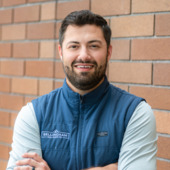

Ziad Youssef, local lawyer and legal care advocate, sat down with Leo to talk about how he’s made a practice of noticing problems and intervening in them, how he earned success through service, and how he’s initiating systemic change in our community.
Today, Ziad is working with cutting-edge legal technology that could cut down attorney time (and thus billable hours), making justice more accessible to everyone, and is also spearheading the #InclusionDeed initiative, an idea he had while walking on a treadmill just a couple weeks ago.
Building Bellingham is hosted by Leo Cohen of the Cohen Group NW. Each month, he sits down with a business leader in our community, to learn how they overcame challenges, and what they’re learning along the way. The conversations get personal, and get real, and get practical for those who aspire to leadership and building into their own community.
“This is Ziad Youssef, founder of MyTrafficMan.net and the Legal Care Center of Whatcom County. But before all that, I was just a kid who took his parents’ hands and flew to America with them at 5 years old… . Before all of the fancy courtroom expectations people have about Ziad Youssef and MyTrafficMan.net, there was just this insecure young man who was trying to find his identity in the world.”
Ziad Youssef is a first-generation immigrant, who moved to Texas at five years old. Over the following forty years, he saw many of his family arrive to the US, as his birth country of Lebanon reeled from its 16-year civil war. In his discussion with Leo, Ziad explains how he, like many immigrants, came from a country with broken infrastructure - clean water isn’t reliable, and electrical service is limited to certain hours of the day. He doesn’t take it for granted that here you can flip a switch and don’t wonder if the lights will turn on.
His first experience of American culture was Texan southern - neighbors dropping by with a cake or pie, and a community that welcomed their efforts to learn English.
“Dad learned English at the gas pump. He worked full service at a gas station and people taught him English, ‘cause all he knew was ‘yes’ and ‘thank you’. And so people would ask him to check the oil and he’d say ‘yes.’ And they’d say, “no, check the oil” and he’d say “thank you”. So they’d get out of the car, show him what it meant to check the oil, and he learned English that way.”
One of Ziad’s teachers noticed in his early years that this young man was a gifted debater - he not only liked to argue, his arguments were well thought out. And today, Ziad considers himself a facilitator. While he can certainly make convincing arguments in a courtroom,
“I like to bring opposite sides together. I like to make it easy for people to come together, and it’s to defuse the tensions.”
Once stateside, Ziad’s family began to put in the work, slowly building up investments - like a gas station with a laundromat. Then the quarters from the laundromat became the downpayment on another gas station. Eventually Ziad’s father and uncle built a chain of about 56 gas stations across the Houston area. Ziad himself went to work, pumping gas at 12 years old, getting paid in chips and dip. When the family invested in high rises, he and his brother were tasked with answering phones and directing calls. In the late 80s, they investigated moving further northward, and found themselves in Whatcom County in 1990.
Ziad is a WWU grad; he has a bachelor’s degree in accounting, and he followed that up with law school at Seattle University. Then it came time to take the bar exam.
And he failed.
He’d been a great student, he’d dived into the vortex of studying both in Bellingham and Seattle, and now this stood in the way of starting his professional career.
This was also in the same season as a breakup with his fiancee at the time.
What now?
Well, he planned to take the test again, but in the meantime, Ziad got back to the basics.
He buckled down and studied.
He hit the gym. Not going for a beach body, just a healthy one, Ziad burned off 135 pounds in 3 years.
And failed the bar exam again.
Reminiscing on those days, Ziad told Leo he failed the exam probably four more times before finally passing.
Along the way, he also looked around him and saw a problem, and decided to intervene:
“I was looking around feeling like I didn't have any peers in Bellingham. I was 24- at 24 kids are still trying to figure out what their major is at Western and I'm, I'm moving on trying to get a professional career started so I was going to leave town ...and I was probably going to go back down there [Houston] and work in a practical accounting job until I could practice law down there… I wrote a letter to them [WCC] explaining why I wanted that job, and the letter says - and I'll never forget it - ‘I want a chance to influence my future peers’. It was my opportunity to intervene in the problem I saw, which is ‘where are my peers at 25’?”
Ziad taught at Whatcom for several years before opening his formal law practice. Leo asked him how it was that he grew from the young man who failed the bar exam multiple times, to the well-known and respected lawyer and paralegal school owner he is today. The whole interchange is well worth the listen, but here’s a highlight:
“There's no shame in putting some hard work in. And here's and here's the thing: I was spoiled. I was entitled. I was that bratty kid - I know, I know that I had privileges other people did not have, but I recognized that the only time I ever got ahead was when I decided to lead with service. So when you ask me how I got there, it's because I put my head down and served. I taught my students. I served my clients.”
Support Groups Now, with decades of success through service behind him, Ziad continues to see areas for improvement and intervene in them. Recently, he realized that day-in and day-out he is immersed in the perspective of the legal community, so he created a small support group with other professionals added something to his calendar - a small mastermind with other professionals.
Here’s how it worked. Ziad created his mastermind groups by recruiting a co-chair, and each of them invited two or three people. They met weekly at first to get buy-in from attendees, then switched to monthly gatherings.
Why to have a co-chair:
There are two invested participants from the start.
The two leaders can split any miscellaneous administrative tasks like scheduling.
Each invites participants from their own separate sphere, thus widening the variety of perspectives.
The group talks about life experience, finances, health, work-life balance, and more. Each person allows the other members to reflect or examine the topic through their perspective “so that we could mine it for opportunities”. Like the AA groups that he refers many of his clients to, this became a close-knit support group for his own challenges.
“it was the most meaningful thing I had done in my life in many many years and it was so simple.”
The #Inclusion Deed Just recently, Ziad noticed another problem and not only decided to address it, he sparked a community movement to overcome it. A while ago, Ziad’s firm had brought in a diversity trainer to provide a new lens
“...from which we as board members in a civil legal aid organization can view problems in the community, and it was about looking at things from a more informed perspective of how systematically racism has worked to change the color and landscape of our community. One of the things that we learned about was that in Edgemoor there were deeds that specifically wrote out in them, whites only.”
Ziad had an idea on how to combat this, and in just the last couple of weeks since, has turned it into a local movement. Systemic racism like this has long been memorialized in recorded documents, even in our own community, so why not overcome it with systemic love and inclusion?
“We could write into deeds language that say: we as a community desire to be free from discrimination. Free from discrimination and hate on the basis of race and sex and religion and national origin. Free from discrimination on the basis of sexual orientation gender identity and gender expression. Free from discrimination on the basis of disability or ability physical and mental ability. And I think if we were to write that down in a deed and record millions of them - millions of them! . . . and I think if we just started adding one paragraph into every deed or deed of trust or any lease that gets signed in Bellingham in Whatcom County we could then be writing the vision for our future and twenty years from now we truly could be free from hate.”
And he’s taking steps to make this happen. He’s been in contact with influential bankers, lawyers, and real estate professionals over the last weeks to mobilize community support around this idea - and it’s been welcomed by the Whatcom County community. (Learn more at InclusionDeed.org and the Inclusion Deed Facebook page.)
Legal Care & Leadership Beyond service, Ziad has a philosophy of care in the legal profession. He looks at systemic problems beneath the individual cases - if those are solved, there will be fewer of those individual cases. He made sure to hire people that were on board with creating consistent, specific systems that provided sustainable, high-quality service to the different types of clients his firm works with. And those people became leaders.
“About three years ago I sat everybody down and said, ‘do you believe in the mission: “leveraging technology to deliver better legal care with the limited number of resources we have” - do you believe in that mission?’” “The next question was ‘Where do you find your leadership? What do you find in this work that is meaningful, so that you can become a leader in that position?’”
And over the years he’s filtered his staff against those questions. Someone might not be a fit if they don’t believe in the mission. Someone who does believe in the mission might be an amazing lawyer but be looking for a leadership opportunity that isn’t currently available, so they might need to find that leadership elsewhere.
“Let them go find their leadership role in that meaningful place. That's a tough one because they're great, they're dedicated, but they're but they're not they're not in the position that they're gonna be most effective in.”
This philosophy goes beyond the staff of MyTrafficMan.net. Ziad also is intervening in how lawyers are trained in Washington State. In WA paralegals have options: go to law school for about $200,000, or get a bachelor’s degree then mentor under an attorney. Ziad founded the Legal Care Academy, where classes of students can take the second option, get real-world experience as a paralegal in his firm, and complete the whole program for about $15,000.
The Academy is not only helping law students achieve their dreams of becoming lawyers, the benefits to Youssef’s law firm have been two-fold, if not more: while other firms are out looking for great paralegals, he’s training them in-house. And his philosophies of legal care are being spread out to other law firms across Washington State.
“Now while my friends are struggling to find paralegals, I'm training three at a time, five at a time, in the paralegal program…. Now my friends call me, “Ziad, who's graduating from your program?”
Ziad’s success has been through service, and also through raising these leaders. He believes that the top leader of an organization or company needs to step back from the business itself, and interact with the broader community. To look out for the larger trends, changes, and issues. To use a ship metaphor, he’s not the captain or the crew - that’s what his leaders are responsible for:
“I tell people now that my staff is directing the ship - I'm directing the waves.”
Ziad’s Recommended Readings:
The E-Myth Attorney by Michael E. Gerber (the original book was the The E-Myth in 1986 and The E-Myth Revisited in 2004. There are editions for several professional fields).
The Evolution of a Legal Care Center by Ziad Youssef (this is the textbook for the Legal Care Academy)
Links & Credits
Subscribe on Apple Podcasts, Spotify, or Stitcher
Hosted by Leo Cohen, Cohen Group NW | Website | Facebook | Instagram
Guest appearance by Ziad Youssef, MyTrafficMan.net & the Legal Care Center Academy | My Traffic Man Website Legal Care Center Academy Website | Inclusion Deed Facebook
Produced and Edited by David Pender Lofgren
Recorded and Mixed by Andy Rick
Videographer & Social Media Jedi: Cooper Hansley
Recorded at Binary Studios | Website | Facebook | Instagram
Building Bellingham is a member of The BellPod Network | Website | Facebook | Instagram
Blog copy by Tiffany Holden


or another way